
Why Sleep Is Part of Your Recovery Programme

The evidence supports the core argument well: acute or partial sleep loss can worsen perceived effort and impair endurance, speed, power, strength and skill performance; endurance work lasting more than 30 minutes appears particularly vulnerable. (PubMed)
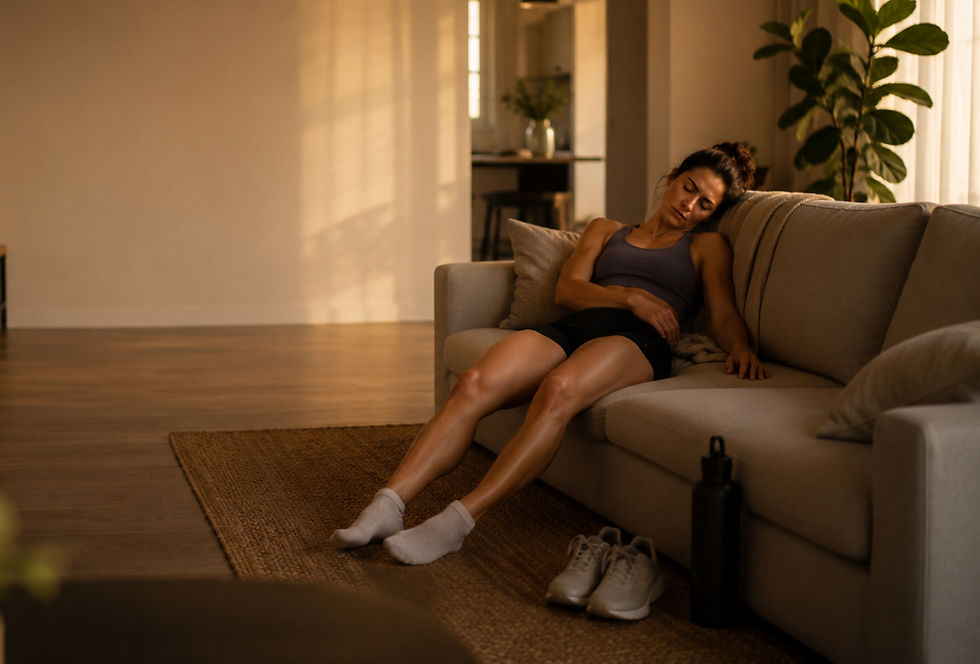
You wake after a short night's sleep. Your legs are not particularly sore, nothing hurts, and yesterday's training seems to have settled.
So you assume you are recovered.
Then you start running, cycling or training.
Your normal pace feels harder. Your legs seem unusually heavy. Concentration slips. Technique feels less precise. You tire earlier than expected.
The missing piece may not be your muscles.
It may be sleep.
Recovery doesn't begin when your muscles become sore. If you want your body to perform tomorrow, sleep tonight is already part of the programme.
You Can Be Recovered Muscularly but Still Perform Poorly
Muscle soreness is only one measure of recovery.
You may wake without sore quads or tight calves and still have reduced physical capacity after insufficient sleep. Sleep loss affects the wider systems involved in exercise, including perception of effort, concentration, motor control and the ability to sustain performance.
This is why a familiar workout can suddenly feel much harder even though nothing appears physically wrong.
A 2025 systematic review and meta-analysis covering 45 studies found that sleep deprivation negatively affected aerobic endurance, explosive power, maximum force, speed and skill control. It also significantly increased rating of perceived exertion—how hard the exercise feels to the person doing it. (PubMed)
In practical terms:
The same hill, pace, weight or workout can feel harder after insufficient sleep.
What Sleep Deprivation Does to Performance
The effect is not confined to feeling sleepy.
Across the research, acute sleep deprivation has been associated with deterioration in several aspects of physical performance, including:
aerobic endurance;
speed;
explosive power;
maximum force;
technical and motor control.
One large meta-analysis of 69 studies found an overall reduction in exercise performance following acute sleep loss, with effects seen across endurance, strength, power, high-intensity exercise and skill-based tasks. (PubMed)
So even if you have followed your training plan perfectly, eaten well and hydrated properly, yet still struggle with a session because the body has not received enough sleep opportunity to support the next performance.
Endurance Athletes Should Pay Particular Attention
Sleep becomes especially important when the activity needs to be sustained. A systematic review and meta-analysis of 31 studies found a moderate negative effect of sleep deprivation on endurance performance. Exercise lasting more than 30 minutes was more affected than shorter-duration exercise. (PubMed)
That is directly relevant to:
runners;
road cyclists;
mountain bikers;
hikers;
longer gym sessions;
endurance events.
A long ride or run already requires the body to manage effort over time. Starting it after inadequate sleep can make maintaining the expected pace more difficult.
For an athlete wondering why a familiar route suddenly felt disproportionately hard, sleep belongs in the recovery conversation alongside training load, nutrition and hydration.
The Early-Morning Athlete Problem
Weekend sport creates a very practical challenge.
The race starts at 06:00.
The group ride leaves before sunrise.
You need to drive to the venue.
Equipment still has to be prepared.
The alarm is therefore set for 04:00—but bedtime remains almost exactly where it normally is.
The result is a shortened sleep opportunity immediately before a demanding performance.
Research on acute sleep loss suggests that restricting sleep during the later part of the night can be particularly detrimental to subsequent exercise performance. (PubMed)
The lesson is not to abandon early-morning sport.
It is to work backwards from the alarm.
When performance matters, the required wake-up time should influence the previous evening's bedtime rather than simply removing several hours from sleep.
Sleep Is Training Too
Training provides the stimulus.
Recovery gives the body the environment in which to respond to that stimulus.
Sleep is a major part of that environment. It is therefore possible to be highly disciplined about:
training + nutrition + hydration + equipment + massage
while repeatedly compromising one of the most important recovery behaviours.
For busy recreational athletes, this often happens because training must fit around work and family life. Sleep becomes the flexible item in the diary.
But when a normal session begins to feel unusually demanding, the answer is not always to train harder.
Sometimes the recovery programme needs attention.
Practical Ways to Protect Recovery
Before important training or competition, protect enough time in bed rather than relying on whether you happen to feel tired at bedtime. Keep sleep and wake times reasonably consistent where life allows, and plan specifically for unusually early race or training starts.
Pay attention to unexpected increases in perceived effort. If a familiar pace feels much harder after a poor night, that may be useful recovery information rather than evidence that your fitness suddenly disappeared.
After substantially reduced sleep, adjusting the intensity or purpose of the planned session may sometimes make more sense than forcing the original programme.
Then support sleep with the other basics that make recovery work: appropriate nutrition, hydration, manageable movement and physical recovery.
Where Massage Fits Into Recovery
Massage can provide another valuable part of the recovery routine by helping ease muscular soreness, reduce physical tension, improve comfort and create a deliberate period of passive recovery.
It also gives the athlete an opportunity to notice what the body is communicating. Sore muscles, general physical fatigue and accumulated overload do not necessarily require the same treatment.
Sleep and massage therefore contribute differently to the same recovery programme.
Massage can support how your body feels during recovery. Sleep provides a recovery environment that should be protected alongside it.
For help distinguishing between soreness, fatigue and accumulated overload, read Sore, Tired or Overloaded? How to Know Which Massage Your Body Needs.
Wrap Up
Your muscles do not have to hurt for your recovery to be incomplete.
Insufficient sleep can make exercise feel harder, reduce endurance and affect the speed, strength, power and control you expect from your body. For longer sessions and early-morning events, sleep planning deserves the same deliberate attention as nutrition, hydration and training.
If tomorrow's performance matters, tonight's sleep is already part of the programme.


Comments